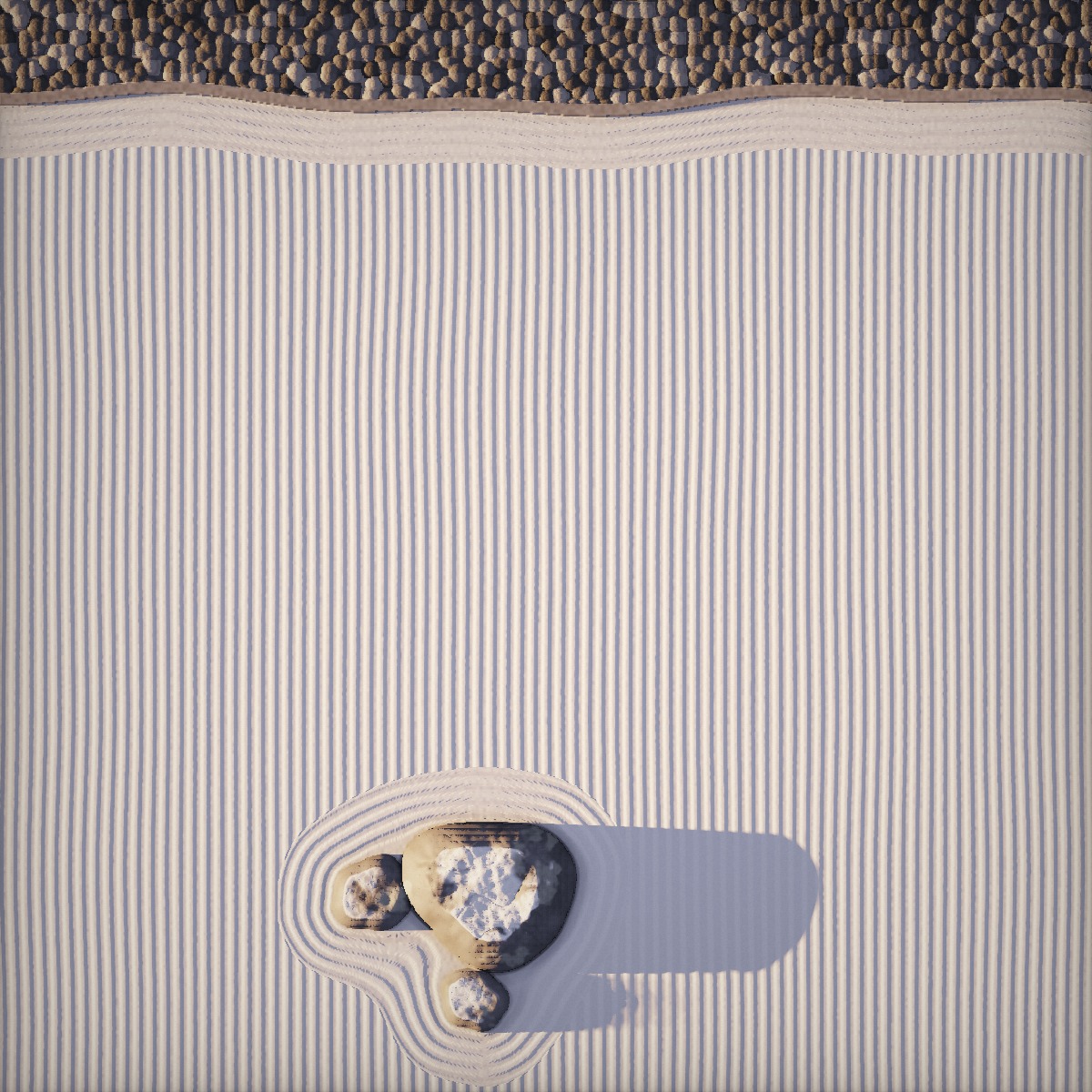
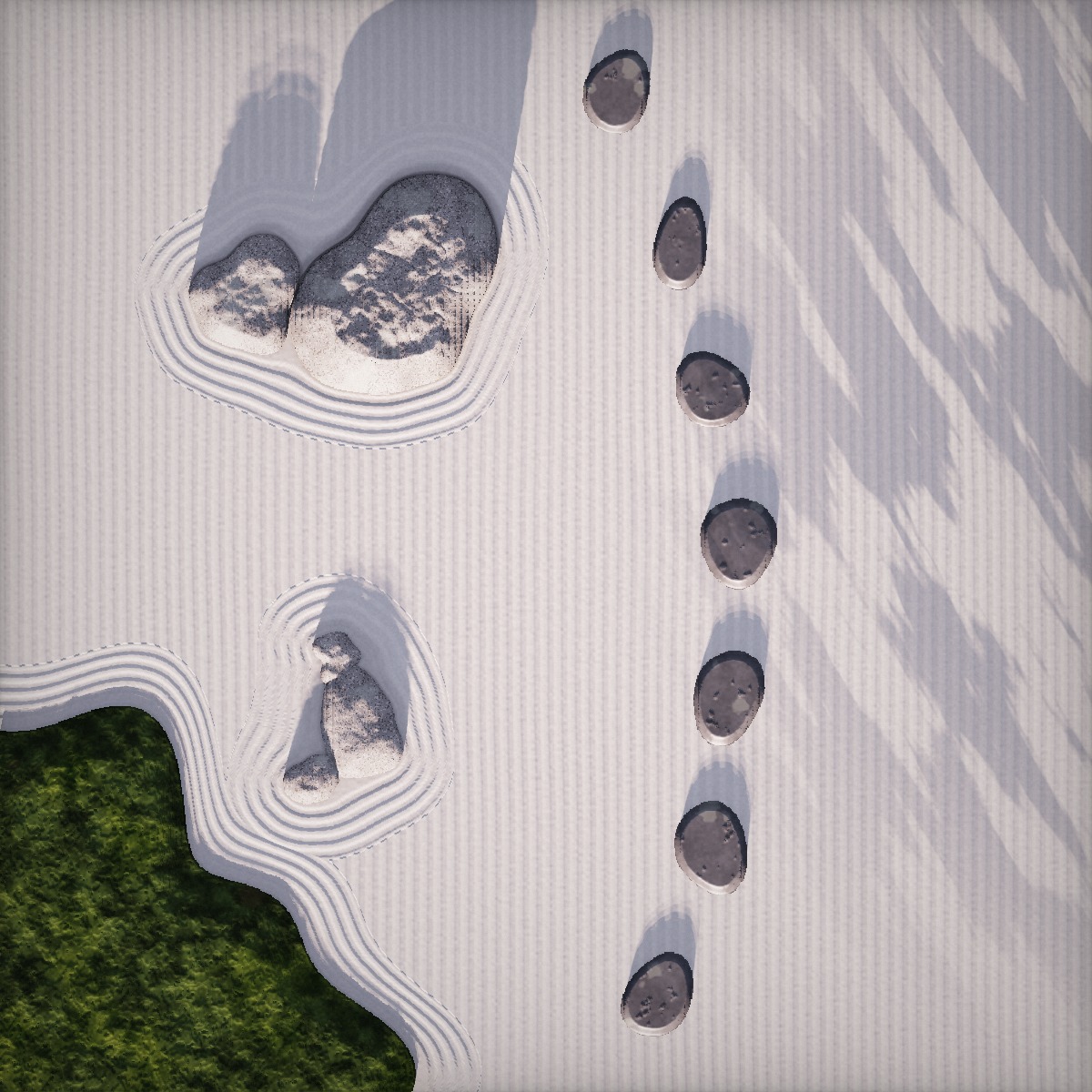
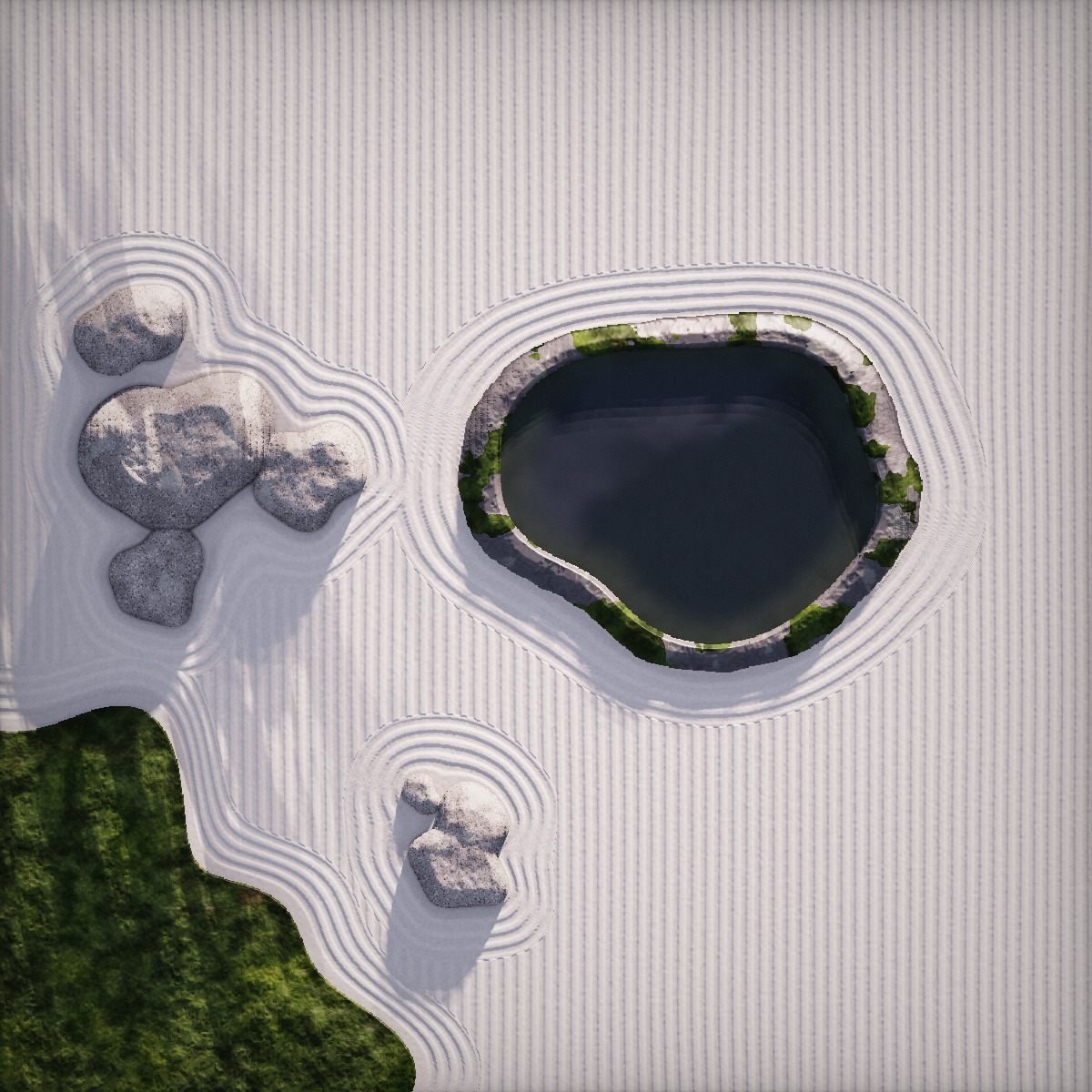
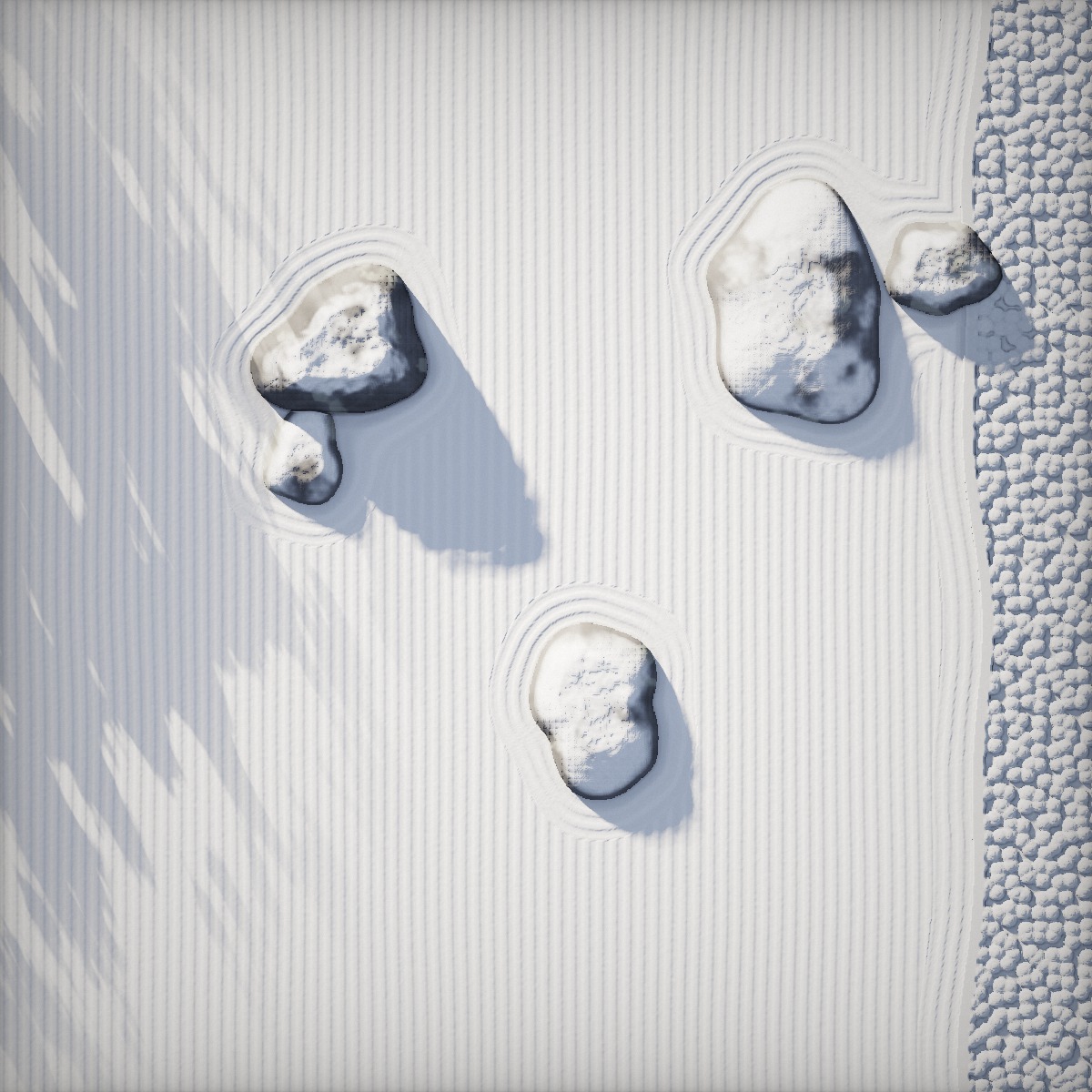
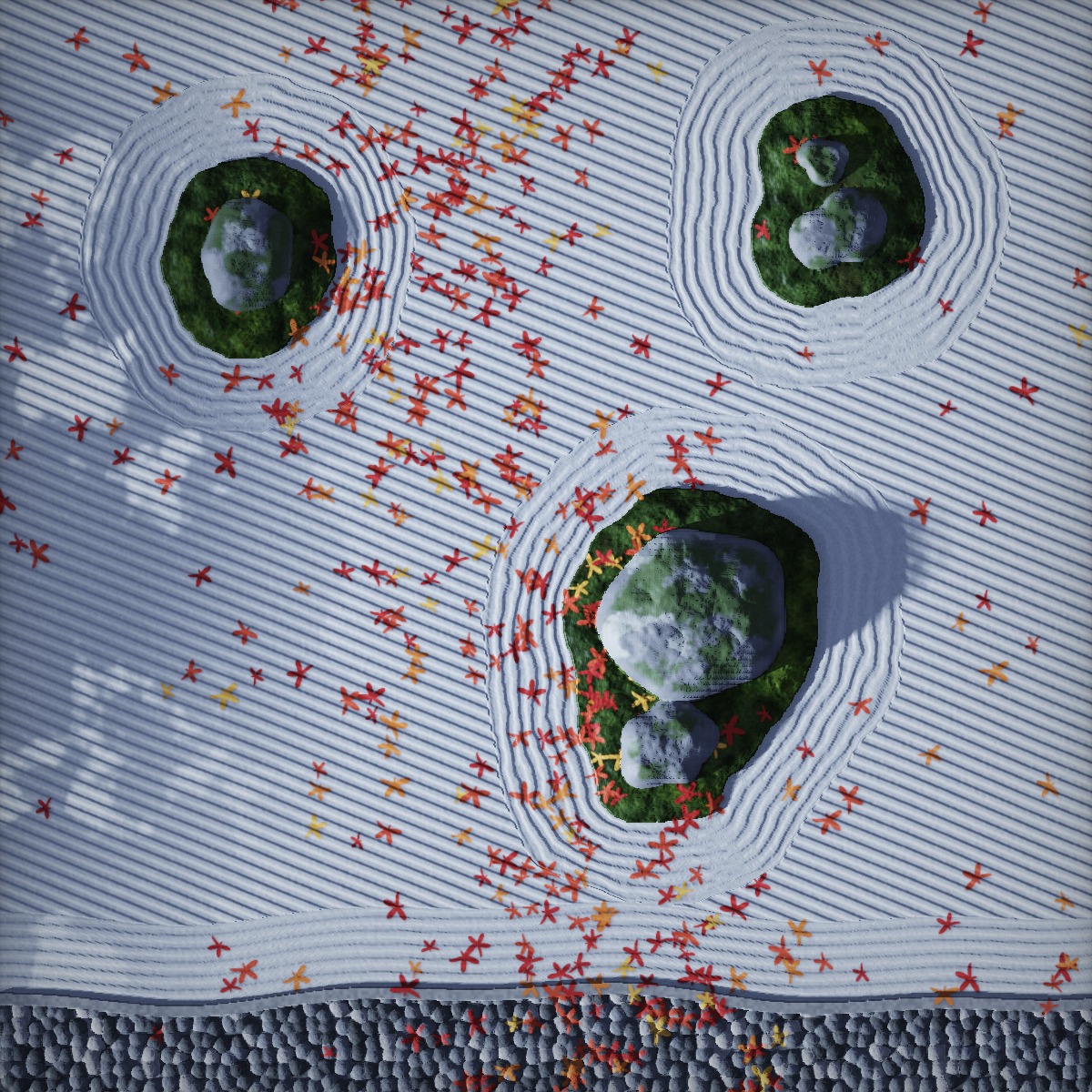
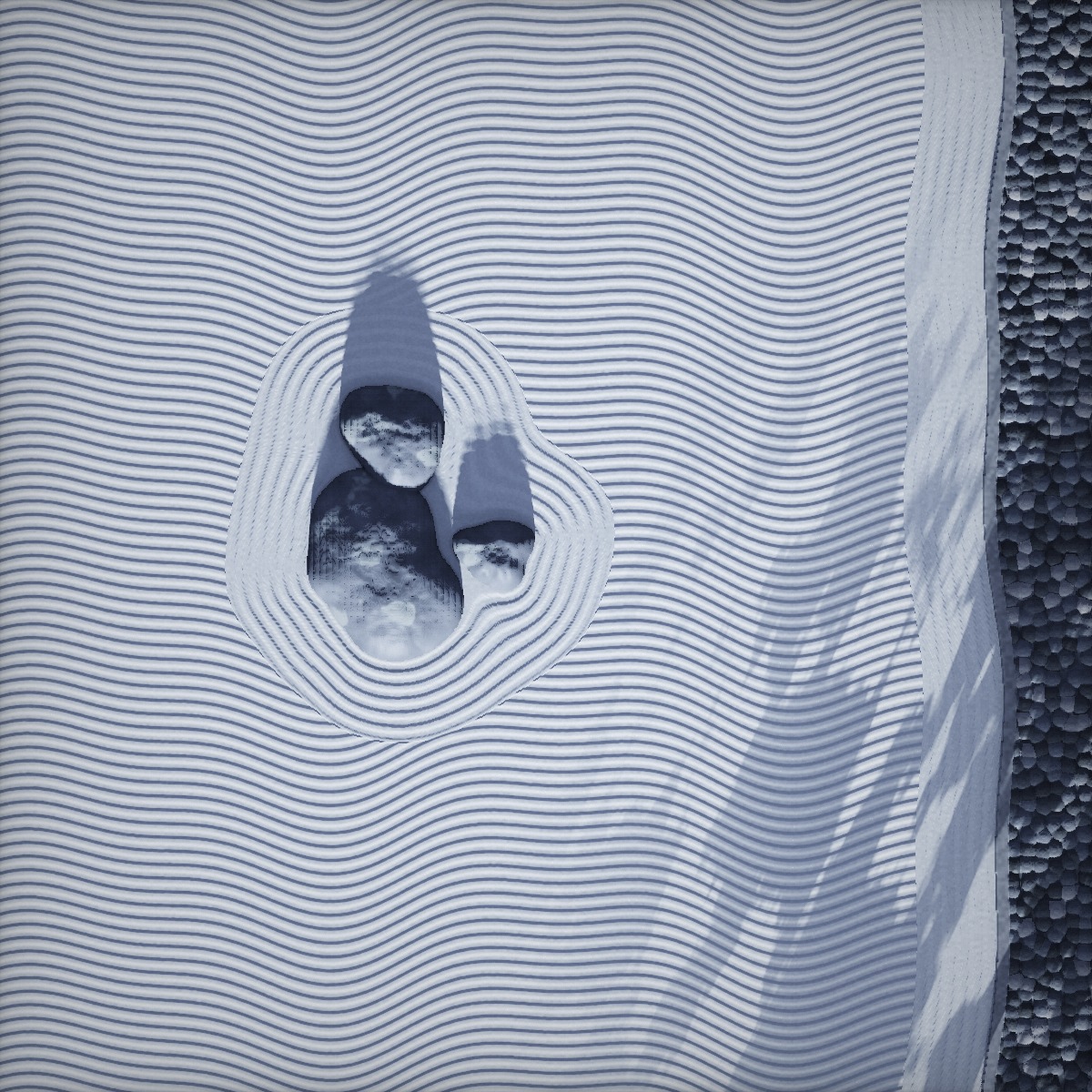
The sand never stays still.
In a Kyoto temple garden, raking the gravel is not a task that ends — it is a daily meditation. Lines become waves, diagonals shift angle, rings around the stones narrow or widen, while the sun slowly crosses the courtyard.
Each Karesansui here begins as a 256-bit hash recorded on Ethereum. From that single seed, the shader sculpts every rock, moss island, pebble border, shadow and season. Once a pattern is complete, the garden rests for five seconds, then quietly carves a new pattern over the previous one.
You do not choose the garden. You plant the hash. The sand rakes itself.
Questions
What is Karesansui?
A collection of 128 generative Japanese dry gardens on Ethereum, built as a sister collection to Bonsai — Sumi-e. Each garden is rendered live in lightweight WebGL 2D from a 15 KB on-chain script.
Can I mint on OpenSea as well as here?
Yes. The contract extends OpenSea's official ERC721SeaDrop standard, so you can mint either on this page (with 0 % platform fee) or directly on OpenSea Drops.
Is the artwork really 100 % on-chain?
Yes. The entire minified, gzipped WebGL 2D generator (~15 KB) is stored inside the Ethereum contract via SSTORE2. Calling tokenHTML(id) returns a self-contained HTML page with zero external dependencies.
Does the animation run smoothly on any device?
Yes. Unlike heavy 3D raymarching, the static rock geometry is baked once into a 2D heightmap texture and the live lighting, shadows and sand raking run in a single lightweight 2D pass.